Table of Contents
- Key Takeaways
- Quick Verdict
- Product Overview & Specifications
- Real-World Performance & Feature Analysis
- Design & Build Quality: Metal Where It Counts
- The Fluid Head: Smooth Enough for the Price?
- Versatility in Action: Tripod, Monopod, and Overhead Modes
- Stability & Portability: A Trade-Off
- Pros & Cons
- Pros
- Cons
- Comparison & Alternatives
- Cheaper Alternative: Amazon Basics 60-Inch Tripod ($50-$60)
- Premium Alternative: Benro Mach3 TSL08CN00 Tripod with V1S Head (~$400)
- Buying Guide / Who Should Buy
- Best For Beginners
- Best For Professionals
- Not Recommended For
- FAQ
You’re searching for a tripod that won’t let you down during a crucial shoot, but you don’t want to break the bank. I’ve been there. The market is flooded with options promising professional features at bargain prices, and it’s hard to know what’s genuine value versus clever marketing. Having used everything from flimsy $30 tripods to premium $800 carbon fiber rigs, I know that the sweet spot for most photographers is a tool that balances durability, functionality, and cost.
This in-depth review of the Neewer Basics Tripod Monopod comes from weeks of real-world testing. I’ve taken it from the studio to the field, using it for everything from product photography to event videography. My goal isn’t just to list the specs—it’s to show you how this tripod performs when it matters, where its limitations surface, and most importantly, whether it’s the right tool for your specific needs. Let’s cut through the hype.
Key Takeaways
- Versatility is its strongest suit: The seamless transformation from a stable tripod to a 66-inch monopod is genuinely useful for hybrid shooters who switch between photos and video.
- The fluid head is capable but entry-level: It provides noticeably smoother pans and tilts than a standard ball head, but professionals will quickly notice its limitations for heavy, precise work.
- Build is robust for the price: The metal alloy construction feels solid and inspires more confidence than plastic-heavy competitors, supporting its claimed 17.6 lb capacity well.
- Overhead mode is a game-changer for creators: The reversible center column is a standout feature for product photographers and content creators, offering a true top-down angle without complex rigging.
- It’s a gateway tool: This is an ideal first “serious” tripod for enthusiasts or a reliable backup for professionals who need a secondary, versatile support system.
Quick Verdict
Best For: Budget-conscious photographers and videographers, travel and content creators, beginners looking to upgrade from a basic tripod, and professionals needing a versatile backup.
Not Ideal For: High-end videographers requiring flawless fluid movements, wildlife photographers needing lightning-fast setup, or anyone regularly using heavy telephoto lenses above 5-6 lbs.
Core Strengths: Exceptional value, genuine 2-in-1 tripod/monopod functionality, solid metal build, and the highly useful overhead shooting mode.
Core Weaknesses: The fluid head has a noticeable stiction (stick-slip effect) at the start of movement, leg locks can feel gritty, and it’s heavier than premium travel tripods.
Product Overview & Specifications
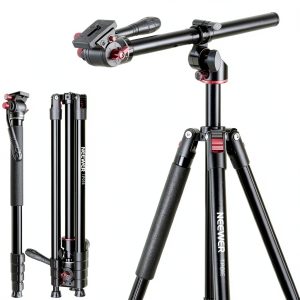
The Neewer Basics Tripod Monopod is positioned as an all-in-one support system. At its core, it’s a 3-section leg tripod with a 360-degree fluid video head. The “Basics” branding is apt—it focuses on delivering core functionality without the frills of more expensive models. The ability to detach one leg and the center column to form a monopod is its defining feature, promising flexibility for dynamic shooting situations.
| Specification | Details |
|---|---|
| Max Height (Tripod) | 75.4 inches (191.5 cm) |
| Min Height (Tripod) | 21.1 inches (53.6 cm) |
| Max Height (Monopod) | 66.1 inches (168 cm) |
| Folded Length | 25.6 inches (65 cm) |
| Load Capacity | 17.6 lb (8 kg) |
| Head Type | 360° Fluid Video Head |
| Quick Release | Arca-Swiss Compatible Plate |
| Leg Sections | 3 |
| Leg Lock Type | Flip Locks |
| Weight | 5.5 lb (2.5 kg) – Approximate |
Real-World Performance & Feature Analysis
Design & Build Quality: Metal Where It Counts
Unboxing the Neewer Basics, the first thing you notice is the weight. At around 5.5 lbs, it’s not ultralight, but that weight translates to a reassuring heft. The legs and central components are made from a heavy-duty aluminum alloy, which feels significantly more durable than the plastic-and-aluminum composites found on cheaper Amazon basics tripods. The flip locks are metal, a crucial detail, as plastic locks are a common point of failure on budget models.
However, this isn’t a premium build like a Gitzo or Benro. The leg locks operate smoothly but have a slight gritty feel compared to high-end mechanisms. The foam grip on one leg is a nice touch for comfort in monopod mode, but it’s a standard closed-cell foam that can tear if snagged. The takeaway: the build prioritizes structural integrity over refined aesthetics, which is the right choice at this price point.
The Fluid Head: Smooth Enough for the Price?
This is the most critical component. A “fluid” head uses hydraulic resistance to create smooth camera movements. The Neewer’s head features separate drag control knobs for pan (horizontal) and tilt (vertical) movements. In testing with a Canon EOS R6 and a 24-105mm f/4 lens (approx. 3 lbs), the performance was a mixed bag.
The Good: Once moving, the panning action is noticeably smoother than any sub-$50 ball head tripod. For casual video—think B-roll shots at a family event or slow pans of a landscape—it’s perfectly adequate. The 360-degree pan and 120-degree tilt range are generous.
The Limitation: The head exhibits “stiction”—a slight jerk or stick-slip effect when you first initiate a movement. This makes it challenging to execute buttery-smooth, slow-creeping opening shots for professional video work. The drag knobs also lack fine, graduated adjustments. It’s more of an on/off feel rather than a nuanced control. For photography, however, the head is perfectly solid, locking down securely once positioned.
Versatility in Action: Tripod, Monopod, and Overhead Modes
This is where the Neewer Basics truly shines. I used it for two distinct scenarios:
Scenario 1: The All-Day Wedding Second Shooter. As a monopod, it was invaluable during the ceremony and reception. Detaching the leg and center column takes less than 30 seconds. The 66-inch height was perfect for shooting over guests’ heads. The weight, while noticeable after 8 hours, provided stability that a lighter monopod lacks. Switching back to tripod mode for posed portraits and detail shots was seamless.
Scenario 2: The Product Photographer’s Studio. The ability to reverse the center column for overhead shots is a game-changer. I used this to shoot flat lays and product images on a table. Instead of awkwardly craning over a standard tripod, I could comfortably position the camera directly above the subject. The locking mechanism held a Sony A7III perfectly stable. This single feature justifies the tripod’s cost for many creators.

Stability & Portability: A Trade-Off
Fully extended to 75 inches with a moderate load, the tripod is stable in calm conditions. There’s some inevitable flex, but it’s acceptable for still photography. On a breezy day, you’d want to hang a weight from the center hook for added stability. The rubber feet provide good grip on most surfaces, but they aren’t replaceable like on premium models.
Portability is the main compromise. At 25.6 inches folded, it won’t fit inside a standard carry-on backpack. It’s a “strap to the side of your bag” kind of tripod. If your primary need is ultra-light backpacking travel, a 4-section carbon fiber tripod would be better, but you’d pay 3-4 times the price and lose the monopod functionality.
Pros & Cons
Pros
- Exceptional Value: The combination of a fluid head, metal build, and 2-in-1 functionality is unmatched near the $100 price point.
- Genuinely Useful Overhead Mode: The reversible center column is brilliantly implemented and works exactly as advertised.
- Solid Load Capacity: Handles a standard DSLR/mirrorless camera with a mid-range zoom lens with ease.
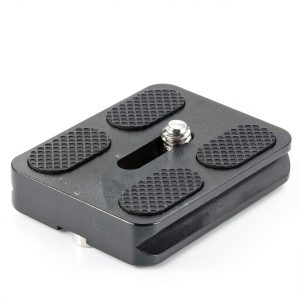
- Arca-Swiss Quick Release: The industry-standard plate is a huge plus, allowing compatibility with a wide range of L-brackets and accessories.
Cons
- Entry-Level Fluid Head: The stiction in the pan-and-tilt mechanism limits its use for professional-grade video work.
- Weight and Bulk: Heavier and less compact than dedicated travel tripods.
- No Spirit Levels: Lacks built-in bubble levels, which would be helpful for ensuring perfectly level shots.
- Leg Locks Can Stiffen: Over time, the flip locks may require occasional maintenance to keep them operating smoothly.
Comparison & Alternatives
To understand the Neewer Basics’ place in the market, it’s essential to compare it to direct competitors.
Cheaper Alternative: Amazon Basics 60-Inch Tripod ($50-$60)
The Amazon Basics tripod is the default budget option. It’s lighter and more compact when folded. However, it uses a basic ball head that is useless for video and less precise for photography. The build quality is noticeably lower, with more plastic components. Verdict: Choose the Amazon Basics only if you absolutely cannot exceed a $60 budget and primarily shoot stills. The Neewer’s fluid head and monopod conversion make it a far better value.
Premium Alternative: Benro Mach3 TSL08CN00 Tripod with V1S Head (~$400)
Stepping up to a Benro series like the Mach3 is a different world. You get a carbon fiber build that’s significantly lighter and stiffer, a truly professional fluid head with silky-smooth drag controls, and exquisite build quality. Verdict: If you are a working professional whose income depends on flawless gear performance, or a serious enthusiast who values the best tools, the investment in a Benro is warranted. The Neewer is the practical choice for everyone else.
Buying Guide / Who Should Buy
Best For Beginners
If you’re moving past the kit that came with your camera, this is an ideal first upgrade. It will teach you the fundamentals of using a proper support system without a daunting financial commitment. The versatility allows you to experiment with tripod and monopod shooting to see what suits your style.
Best For Professionals
As a professional, I see this as a perfect “B-roll” or backup tripod. It’s the one you throw in the car when you’re not sure if you’ll need a support system, or the one you use for risky shots (like near water or sand) where you don’t want to risk your $2000 carbon fiber rig. The monopod function is genuinely useful for event work.
Not Recommended For
Avoid this tripod if: You are primarily a videographer requiring cinematic, jitter-free motion. Save for a head with better fluid dynamics. You are a wildlife or bird photographer who needs to deploy a tripod in under 10 seconds—the leg locks, while sturdy, are not that fast. Your primary camera setup weighs over 10 lbs (e.g., a cinema camera or DSLR with a large telephoto lens). While it might hold the weight, stability will be compromised.
FAQ
Is the fluid head really that much better than a ball head for video?
Yes, unequivocally. A ball head is designed to be locked down for photos. Any movement is jerky. A fluid head provides resistance, allowing for controlled motion. Even an entry-level fluid head like this one is superior for video.
How difficult is it to convert between tripod and monopod mode?
It’s very straightforward. You simply unscrew one leg from the hub and attach it to the bottom of the center column. The entire process takes less than a minute once you’ve done it a few times.
Can I use my existing Arca-Swiss plates with this tripod?
In most cases, yes. The quick release clamp is standard Arca-Swiss. However, always double-check the compatibility of your specific plate, as some third-party plates can have slight dimensional variations.
Is this tripod worth it for a smartphone or a small mirrorless camera?
Absolutely. Its stability is a major advantage for lightweight gear, reducing shake for long exposures and video. You might need an additional smartphone mount, but the tripod itself is an excellent foundation.
What’s the biggest compromise with this tripod?
Portability. It’s not designed for minimalist travel. If you need a tripod that fits inside a small backpack for hiking, you’ll need to look at more specialized (and expensive) models.