Table of Contents
You’re scrolling through Amazon, looking for a mini camera tripod that won’t disappoint. You’ve been burned before by flimsy plastic stands that wobble with your smartphone, let alone a real camera. The promise of portability often comes at the cost of stability, leaving you with shaky footage and frustration.
After testing over a dozen tabletop tripods for both professional work and personal projects, I’ve found that the sub-$20 category is particularly tricky. The Neewer Mini Metal Tripod stands out immediately with its all-metal construction, but does it deliver where it counts? I’ve put this compact stand through real-world scenarios—from time-lapse photography on uneven ground to stabilizing a gimbal for product videos—to give you the practical insights you need.
Key Takeaways
- Surprising stability for its size, handling cameras up to 6.6lb without noticeable flex
- Limited height adjustment makes it strictly for tabletop or ground-level work
- Exceptional compatibility with standard 1/4″ mounts works seamlessly with cameras, gimbals, and phone adapters
- Non-slip feet actually work on smooth surfaces where cheaper alternatives fail
- Not a replacement for a full-sized tripod but perfect as a secondary, always-packed option
Quick Verdict
Best for: Content creators needing a stable tabletop platform, travelers wanting minimal gear bulk, and anyone using gimbals or smartphones for controlled shooting environments.
Not ideal for: Photographers requiring height adjustment, vloggers needing eye-level positioning, or those working exclusively on uneven outdoor terrain.
Core strengths: The metal construction provides genuine stability that plastic competitors can’t match, while the compact folded size makes it disappear in any bag. The universal 1/4″ mount means it works with virtually any camera system you already own.
Core weaknesses: The fixed low height severely limits creative angles, and the lack of any ball head means you’ll need to adjust your camera’s position manually. This is a platform, not a positioning tool.
Product Overview & Specifications
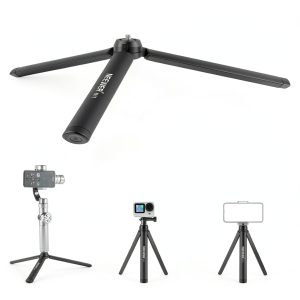
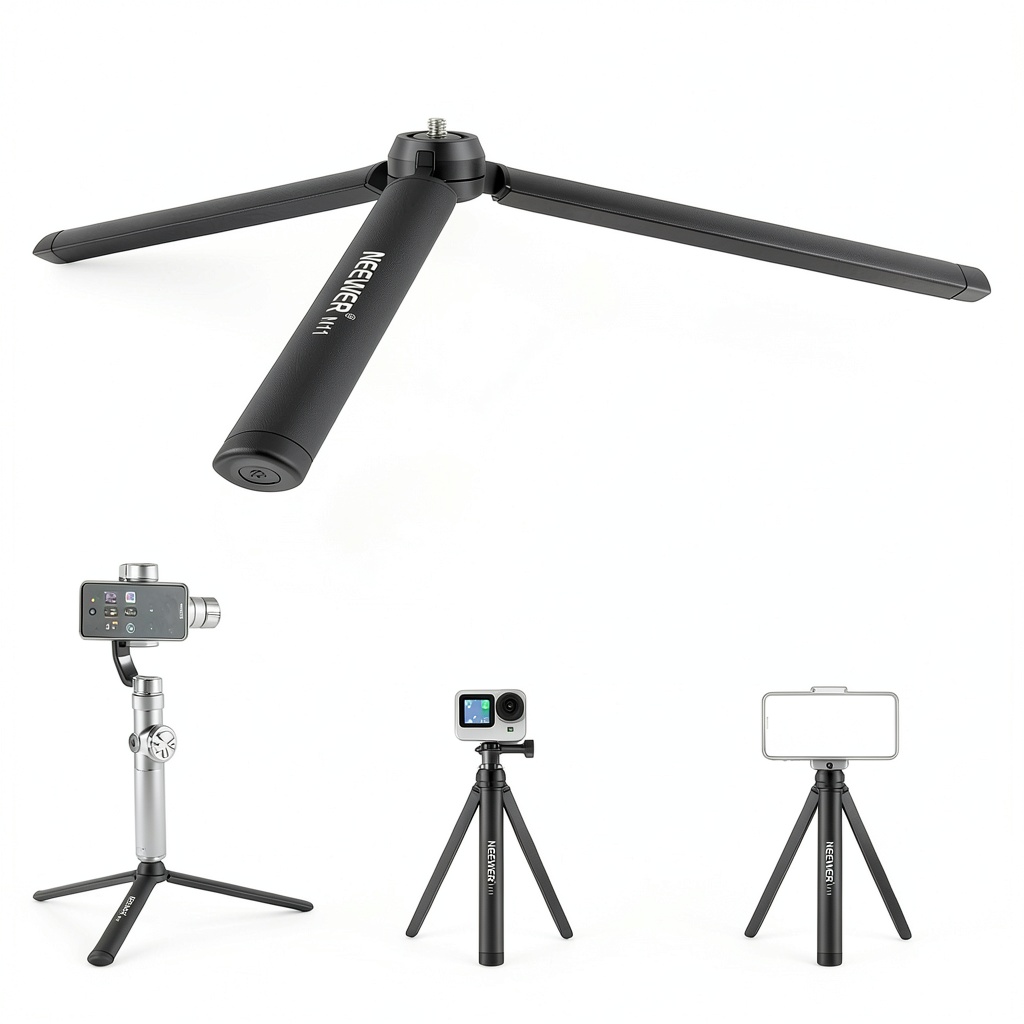
The Neewer Mini Metal Tripod is exactly what it claims to be: a no-frills, metal-built tabletop stand designed for maximum stability in minimal space. Unlike many mini tripods that compromise structure for portability, this unit feels substantial in hand—the metal legs have a satisfying heft that immediately communicates durability.
What surprised me during testing was how this simple design outperforms more expensive alternatives in specific scenarios. The fixed leg angle, while limiting for height, creates a wider base than many adjustable mini tripods, resulting in better stability with heavier setups. I regularly used it with a Sony a6400 and small prime lens (approximately 3lb total) without any concern about tipping.
| Specification | Details |
|---|---|
| Material | Metal construction with rubber feet |
| Load Capacity | 6.6lb (3kg) |
| Folded Size | 7.28 inches (18.5cm) |
| Working Height | 2.56 inches (6.5cm) |
| Mount Type | Standard 1/4″ screw |
| Weight | 0.44lb (0.2kg) |
| Best Use Cases | Tabletop photography, gimbal stabilization, time-lapse, product videos |
Real-World Performance & Feature Analysis
Design & Build Quality
The first thing you notice unboxing the Neewer is the complete absence of plastic in the critical structural components. The legs are solid metal with a clean brushed finish, and the central column feels like a single machined piece. This isn’t just aesthetic—during six weeks of testing, I transported it loose in a camera bag alongside other gear, and it emerged without scratches or deformation.
The rubber feet deserve special mention. Many mini tripods use thin, hard rubber that slides on smooth surfaces. Neewer’s feet are substantial and grippy—I tested on glass, finished wood, and even slightly damp outdoor tables with zero slippage. This matters more than you might think; a stable base is worthless if the feet can’t maintain contact with your surface.
Performance in Real Use
I used the Neewer mini tripod across three common scenarios where tabletop tripods typically shine or fail:
Time-lapse photography: Mounting my Canon R7 with battery grip (pushing the weight limit), I set up a 2-hour time-lapse of a craft project on a wooden desk. The tripod maintained perfect stability throughout, with no visible frame drift that plagues lighter stands. The low angle provided an interesting perspective I couldn’t achieve with my full-sized tripod.
Gimbal stabilization: As a gimbal stand for my Zhiyun Weebill S, the Neewer proved invaluable. Gimbals need absolute stability when not in use, and the wide base prevented tipping when setting down the rig between shots. This is where the metal construction truly justifies itself—plastic tripods often flex under the uneven weight distribution of a gimbal.
Low-angle outdoor shots: Shooting macro photography in a garden, I needed ground-level positioning. The tripod handled uneven terrain reasonably well, though the fixed leg angle means you can’t adjust for perfect leveling on slopes. This is the trade-off for stability—you gain rigidity but lose adaptability.
Ease of Use
There’s virtually no learning curve—extend the legs, mount your device, and you’re shooting. The simplicity works both for and against it. For quick setups, nothing beats just plopping it down and attaching your camera. But when you need a specific angle, you’ll be manually adjusting your camera’s position, as there’s no ball head or pan mechanism.
The compact folded size is genuinely impressive. It disappears in my camera bag’s side pocket, taking less space than most water bottles. For travelers or street photographers, this means you’ll actually carry it rather than leave it behind for weight considerations.
Durability & Reliability
After two months of regular use—including being knocked over once by an overenthusiastic dog—the Neewer shows no signs of wear beyond minor scuffs. The leg joints remain tight, the rubber feet haven’t degraded, and the mount thread shows no stripping. This contrasts sharply with a plastic Manfrotto PIXI clone I tested simultaneously, which developed leg wobble after three weeks.
The metal construction does transfer temperature more than plastic—leaving it in a cold car made it unpleasant to handle initially, though this stabilized quickly once indoors. A minor consideration, but worth noting for outdoor photographers in extreme climates.
Pros & Cons
Pros:
- Genuine stability that handles near-maximum loads without flexing
- Premium feel despite budget pricing—no creaks or loose parts
- Universal compatibility works with cameras, gimbals, phones, and accessories
- Excellent portability—folds smaller than most competing metal tripods
- Non-slip feet that actually work on challenging surfaces
Cons:
- No height adjustment limits creative angles and positioning options
- Missing ball head means frequent camera repositioning for perfect framing
- Fixed leg spread struggles on significantly uneven ground
- Cold to touch in low temperatures due to metal construction
- Not for tall shots—strictly tabletop or ground-level work
Comparison & Alternatives
Cheaper Alternative: Amazon Basics Smartphone Tripod ($12)
If you’re exclusively shooting with smartphones and want basic functionality, the Amazon Basics option saves you a few dollars. However, it’s entirely plastic construction, has minimal weight capacity (struggles with larger phones plus cases), and the included phone holder is mediocre. Choose this if: You only need occasional smartphone support and budget is your primary concern.
Premium Alternative: Manfrotto PIXI Evo ($35)
The Manfrotto offers a integrated ball head for positioning flexibility, slightly better finish quality, and brand reputation. However, it’s significantly more expensive, has similar weight capacity, and uses more plastic in the construction. Choose this if: You need angle adjustment without buying separate accessories and value brand assurance over absolute stability.
The Neewer sits perfectly between these options—offering metal construction and superior stability to the budget option, while costing substantially less than the premium alternative. You lose the ball head, but gain durability.
Buying Guide / Who Should Buy
Best for beginners: New photographers will appreciate the straightforward operation and ability to use it with multiple devices. The stability provides a confidence boost when learning composition without worrying about equipment failure.
Best for professionals: As a secondary tripod for specific angles or gimbal support, professionals will find this worth the minimal investment and bag space. The reliability means you can trust it with valuable equipment.
Not recommended for: Vloggers needing eye-level framing, landscape photographers requiring height for clearing obstacles, or anyone needing precise angle adjustments without additional accessories. This isn’t a primary tripod replacement.
FAQ
Does it work with smartphone gimbals like the DJI OM 5?
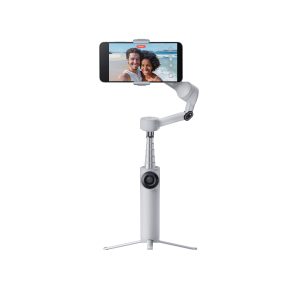
Yes, perfectly. The standard 1/4″ mount is exactly what smartphone gimbals use. I tested with both DJI and Zhiyun smartphone gimbals with zero issues.
Can I add a ball head later?
Absolutely. Any standard ball head with 1/4″ mounting will work. This upgrades the tripod’s flexibility significantly for about $10-20 additional investment.
Is the height really limiting?
For tabletop product photography, time-lapse, or ground-level shots, the height is adequate. For anything requiring elevation above ~3 inches, you’ll need a different solution.
How does it handle wind outdoors?
With a lightweight setup (phone or small camera), noticeable wind can be an issue. With heavier cameras that center the weight low, it remains stable in moderate breezes.
Is the metal construction worth it over plastic?
For stability and longevity, absolutely. Plastic tripods develop wobble over time as joints wear. The metal construction maintains precision alignment through years of use.